


News
Foreign Police: Credibility and prestige grow every year // Humans of NATO Days
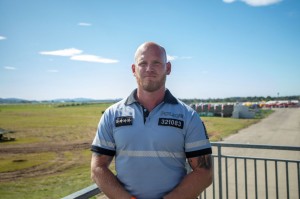
Airports are the only truly guarded borders, illegal migration is a pan-European issue, and the service’s prestige grows every year. Today, the Foreign Police play a key role in the security of the Czech Republic and the Schengen Area. Captain Josef Urban has served with the Police of the Czech Republic since 2008 and currently holds the position of spokesperson for the Directorate of the Foreign Police Service. In this interview, he explains why this is no longer a marginal area of work, what the duties of Foreign Police officers involve, and what service on the front line of modern security looks like.
If you were not to introduce yourself by your position, but with one sentence, what would it be?
That’s a tricky opening question. I see myself as a link between the world of the Foreign Police and the public – an interpreter who translates complex police work into plain language.
What led you to the Police of the Czech Republic, and why specifically to the Foreign Police?
You might be surprised, but since childhood I wanted to make a living as a professional athlete. When that didn’t work out, I thought about where I could work and still stay active. The army or the police – both have special units. Back then, I probably wouldn’t have cared which. I didn’t know anyone in the army, but my neighbor was with the police and signed me up. Today, I’m glad he did. I joined the police in 2008 and followed the classic path: patrol duty, emergency response, and escort departments. I was also a member of a riot unit for almost ten years. During my studies in international relations, however, I became fascinated by the dynamic development of the Foreign Police. I wanted to be part of it. I started at the Foreign Police Department in Hradec Králové, in the unit for residence checks, investigations, and escorts, where I quickly found my footing. Within a few years, I gained experience in everything from residence inspections at factories, interviewing migrants, deciding on expulsions, to supervising operations. After less than three years, I was offered a position in the documentation department, our small “detective unit.” After a year, I received an offer from Prague, and nearly four years ago I settled at the Directorate of the Foreign Police Service as a spokesperson.
How did your view of the Foreign Police change after you joined?
Radically. During my first years, I saw “foreign operations” as a marginal service that few people understood. Today, I see it as a crucial component of security not only in the Czech Republic but across Europe. Illegal migration is a topic that interests almost everyone. It starts over a beer in a pub and ends up in pre-election debates. Human smuggling and illegal migration have become major global issues and have even influenced election outcomes. The Foreign Police’s credibility and prestige really grow every year.
What has surprised you the most about this service?
Definitely the high level of specialization and the emphasis on expertise and education. We also have modern workplaces like the National Document Control Center, where we collect and analyze forgeries from all over the world, or the National Border Protection Situation Center, where colleagues evaluate risks related to illegal migration 24/7. We also guard all Czech international airports, which today are our only truly secured borders. Around 18 million passengers passed through Prague Airport last year, and several hundred Foreign Police officers ensure security there. We are modern-day guards of the gateway to the Czech Republic and the Schengen Area. For anyone serving there, it is a significant responsibility and a matter of prestige. Then there are our undercover officers, Air Marshals from the Aircraft Escort Unit, who quietly ensure safety on board aircraft. And that’s not all. The Foreign Police Service is truly a modern branch of the police, keeping pace with the latest technologies, including AI.
How do you differ from other police units or the Customs Administration?
That could fill a book, because the public often confuses all the uniforms. I’ll try to explain it simply. First, we are an integral part of the Police of the Czech Republic, just like traffic police or criminal investigators. Unlike the Customs Administration, which falls under the Ministry of Finance and focuses primarily on goods, customs, and taxes, our essential and irreplaceable role is to check the legality of foreigners’ residence in the Czech Republic. With over a million foreigners currently living here, we are never bored. Last year alone, we detected almost 11,000 illegal migrants – about thirty per day. It’s also important to clarify a common misconception: the Foreign Police do not decide on foreigners’ residence. We are not the authority issuing visas or residence cards. That responsibility belongs to the Ministry of the Interior, specifically the Department of Asylum and Migration Policy (OAMP). While OAMP officers decide on residence, we ensure that the rules are actually followed.
Today, just under three thousand officers serve in the Foreign Police Service. Our structure is straightforward: 14 regional Foreign Police departments under the police directorates, plus the Directorate of the Foreign Police Service in Prague.
What does a typical workday look like?
It starts early. I get up before five in the morning to reach Prague on time. The day begins with monitoring news from home and abroad for the leadership briefing. Then it’s a whirlwind: responding to media and public inquiries, creating content for social media, and preparing major events like NATO Days. It’s varied, fast-paced, and never boring. I should also mention that I am not a walking encyclopedia of the Foreigners’ Residence Act, so I spend a large part of the day consulting our experts, who guide me to the correct answers to often tricky questions.
How many times have you attended NATO Days, and what made this year special?
This was my second participation, following last year’s pause, and I hope not the last! Every year is special to me. At heart, I’m still the kid fascinated by modern military technology. Who didn’t want to be a soldier in kindergarten? Seeing everything humans are capable of creating for security in one place never ceases to amaze me.
At NATO Days, you’re constantly in the public eye, unlike in regular service. What is that like?
A spokesperson rarely works behind the scenes, so I’m used to public appearances. But speaking to a crowd of nearly 100,000 people at the moderator’s desk is a completely different experience than lecturing fifteen students, though even they can throw you off. I’m mostly glad we can show people up close what the work of the Foreign Police entails and bring it closer to the public.
How does a spokesperson’s work at such an event differ from regular duties?
Preparation is key. For NATO Days, I can fine-tune a script weeks in advance. That’s impossible with the media: if there’s a suspected bomb at an airport, neither journalists nor the public can wait weeks for an answer. I must respond immediately, accurately, and maintain a constant overview of events. Sometimes, the threat is serious, and there is no room for delays or mistakes.
What interests visitors the most?
The star attraction is our “mini vehicle” – the smallest car in police colors, which used to patrol Prague Airport. More broadly, people are fascinated by airport operations: document checks and special units like bomb disposal experts, dog handlers, and snipers.
|
|
You commented on an operation against human smugglers. How often do officers face such situations in real life?
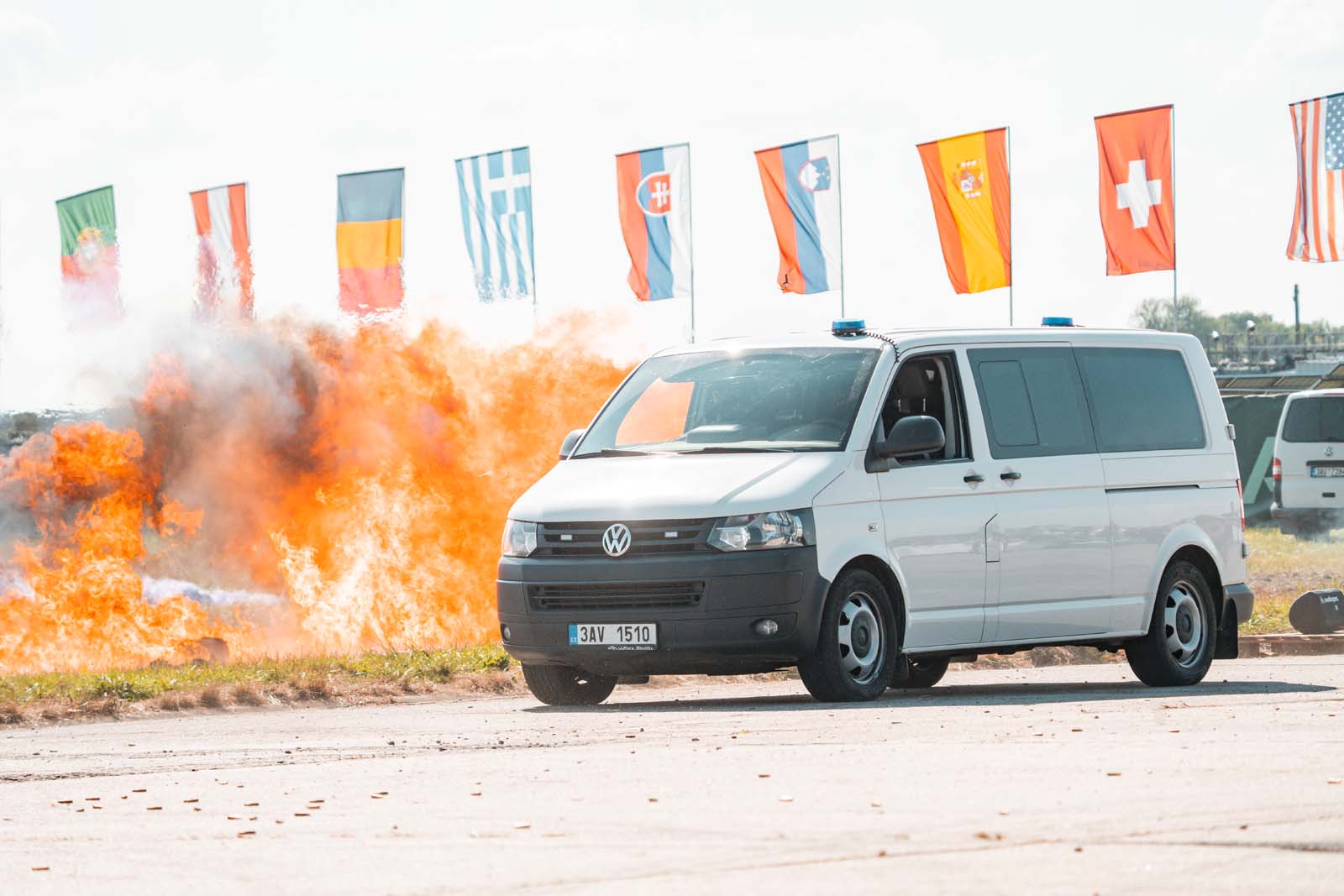
Thankfully, the current situation with transit illegal migration is relatively calm, and extreme cases are rare. The demonstration is exaggerated to entertain viewers, but officers apply real, rigorous training. We train constantly to stay prepared, even though we hope never to have to use these skills. In previous years, such operations did occur, not only here but along the entire Western Balkan route.
Do you have a funny story from NATO Days?
I’m essentially paid to talk, but the longer I do this job, the more I realize sometimes it’s better to stay silent. I have plenty of funny stories, but I’ll keep them to myself – police jokes rarely happen by accident.
Anything you’d like to add that hasn’t been mentioned?
Definitely come to the next edition! You won’t easily find an event of this scale in Central Europe.
What message would you like to send to fans in conclusion?
I’m not into big speeches, but if I were to say something on behalf of the entire Foreign Police, I’ll adapt a famous quote from “nuclear grandma” Dana Drábová:
“The migration situation over the Czech Republic remains normal.”
Partners














.jpg)